
A road is only as strong as the soil beneath it. Asphalt and base course can look perfect on the day they are laid, but if the earthwork underneath was not compacted properly, the road settles, cracks and fails within a few seasons. That is why, on our road and site development projects, every compacted layer is tested before the next one is placed.
Step 1: know the target in the laboratory
Before compaction starts, a sample of the fill soil goes to the laboratory for a Proctor compaction test. This gives two numbers: the maximum dry density the soil can reach, and the optimum moisture content at which it reaches it. These become the benchmark for everything that follows on site.
Step 2: place and roll in controlled layers
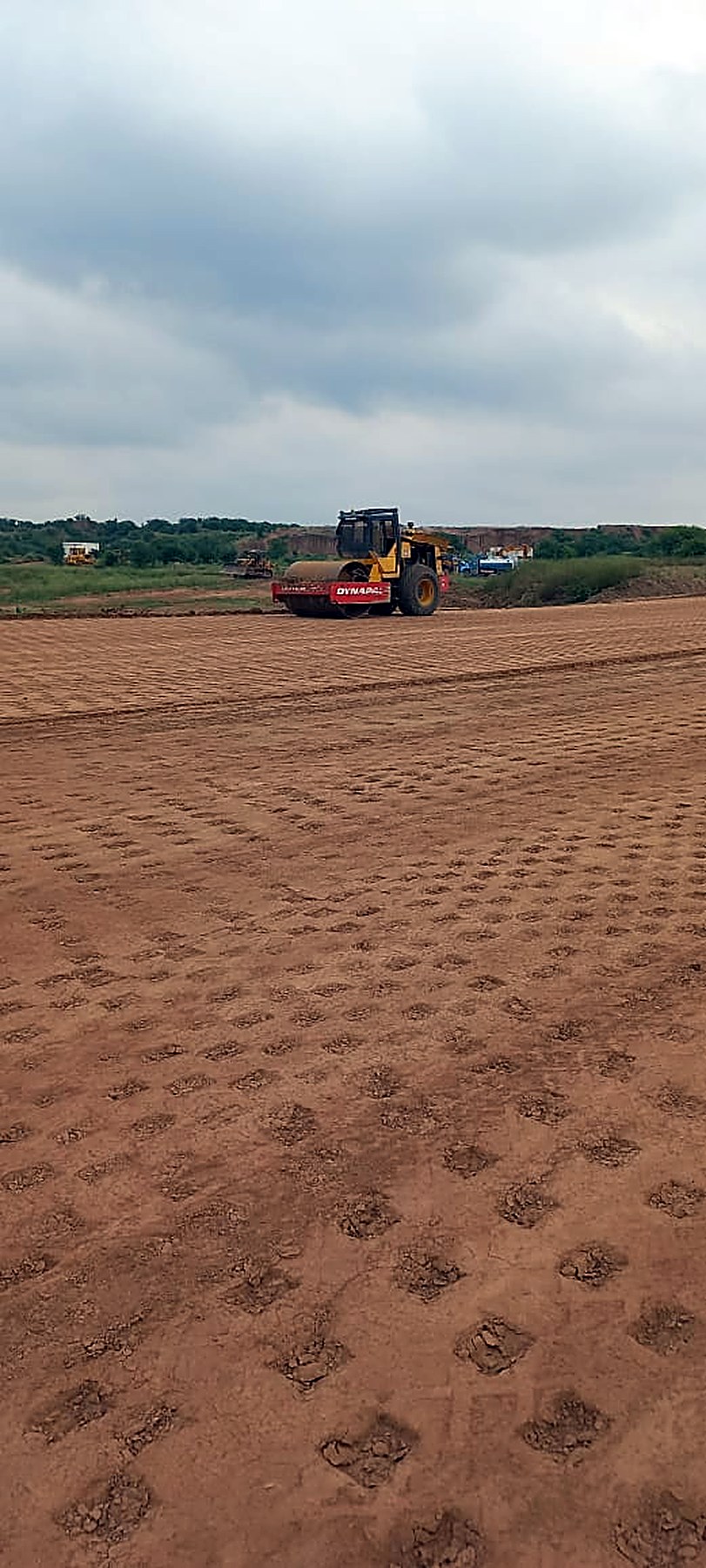
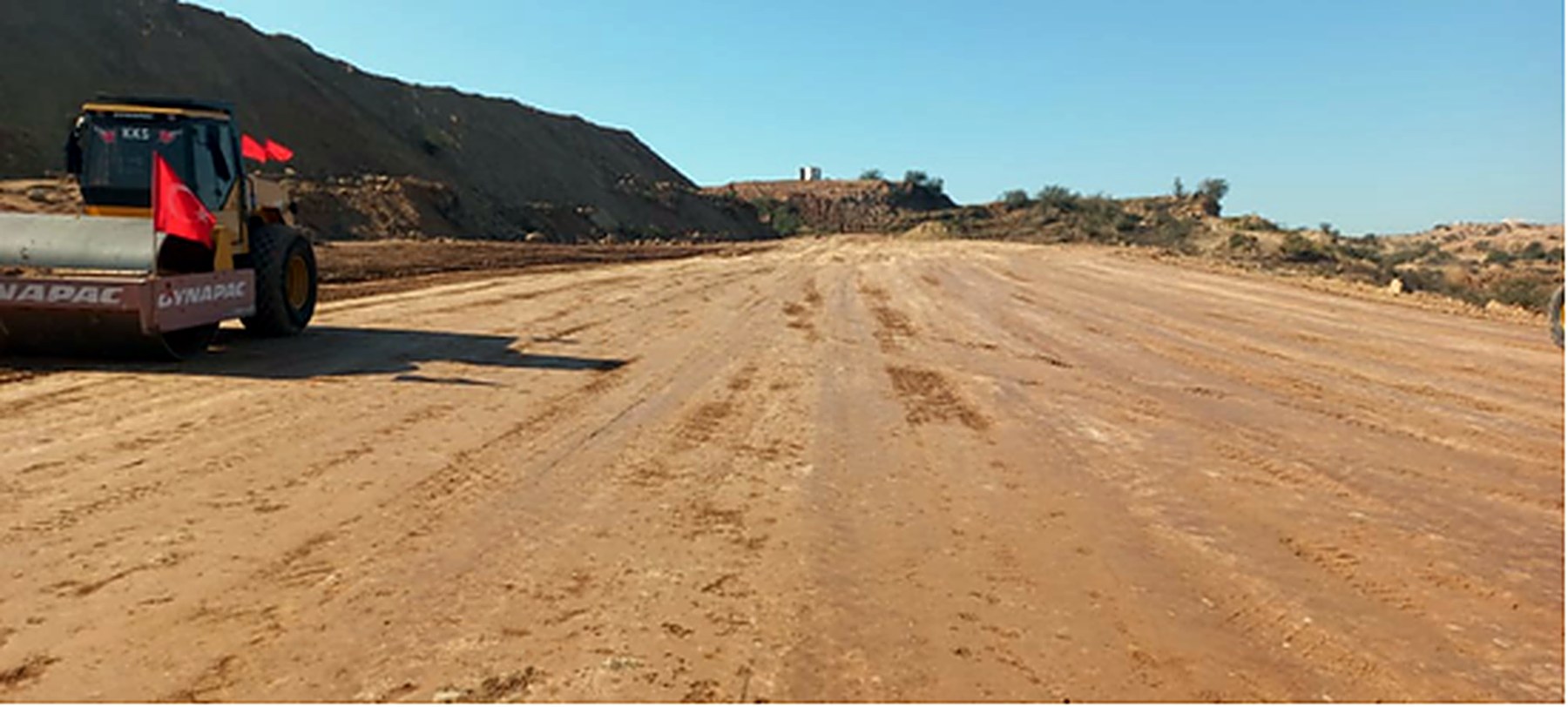
Fill is spread in layers of controlled thickness, brought to the right moisture, and rolled. Cohesive soils are worked with a sheepsfoot (padfoot) roller, which kneads the layer from the bottom up; a smooth-drum roller then finishes the surface. Placing thick layers to save time is one of the most common causes of failure, because the roller cannot reach the bottom of the layer.
Step 3: test in the field, by the core cutter method
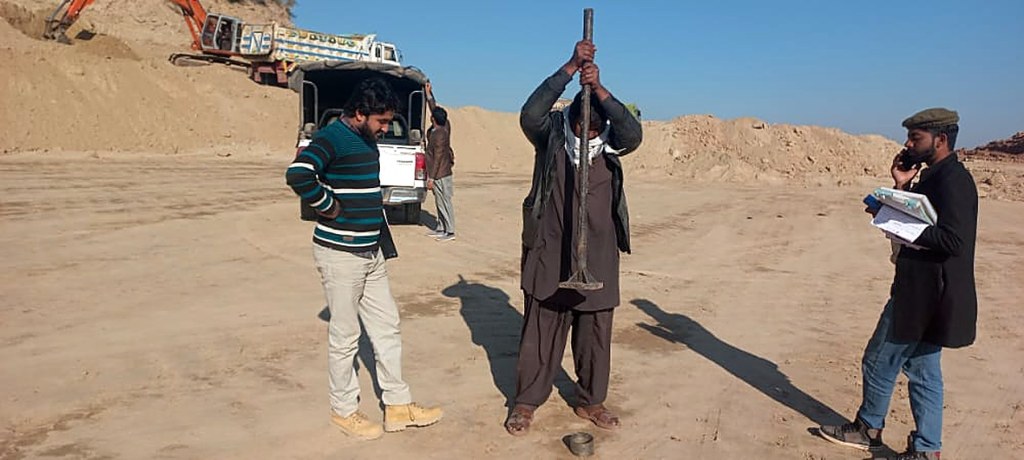
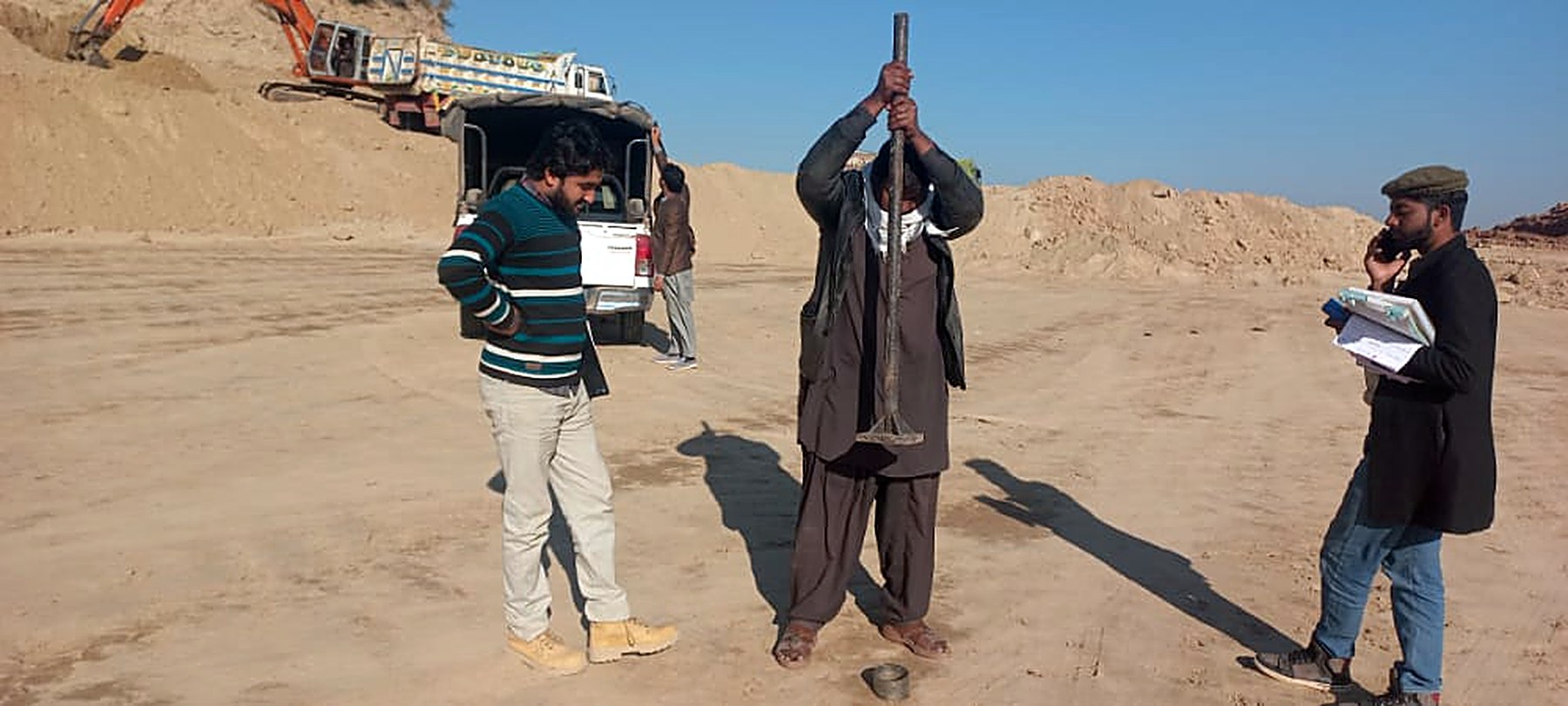
Once a layer is rolled, its field dry density is measured. On cohesive soils we use the core cutter method (the drive-cylinder method of ASTM D2937): a steel cylinder of known volume is driven into the compacted layer with a rammer and dolly, dug out full of soil, trimmed and weighed. From the weight, the volume and the moisture content, the dry density of the layer is calculated. On granular soils, where a cutter cannot be driven cleanly, the sand replacement method is used instead.
Step 4: compare, accept or rework
The field dry density is compared with the laboratory maximum to give the percentage compaction, which must meet the figure set in the project specification. If it does, the layer is accepted and recorded. If it does not, the layer is reworked and tested again. The next layer is not placed until the one below has passed.
Why it matters to the client
Every test is logged with its location, layer, result and date, so the client can see exactly how the ground under their road was built. It is one small part of The Tekton Standard: nothing is covered until it is checked, and nothing is checked without a record.

